Top Security Leaders on Governing AI Agents. Now available on-demand at agent.id.

Govern AI agents. agent.ID, Nov 5

Watch now.

Watch now.

Platform

Customers

Resources

Platform

Customers

Resources

Easy Access Requests with New Workflows Dashboard

Profile Icon

Staff

Product

0

1

Managing access to resources is a pain.

Discovering resources, requesting access, and then waiting for approval can take days.

We're excited for this new layout of our dashboard which allows people to easily request access, connect to resources, and even create resources that don't yet exist. For us, it's important that our user experience is delightful. By making usability enhancements like these, we're aligning with our vision to create the future of access management.

A New Workflow for Access Requests

In this new workflow, we guide users in requesting access from start to finish.

First, we make it easy to get a view of all apps and infrastructure, so it's straightforward to find the resources you need. With the new dashboard, you can see all your systems in one place.
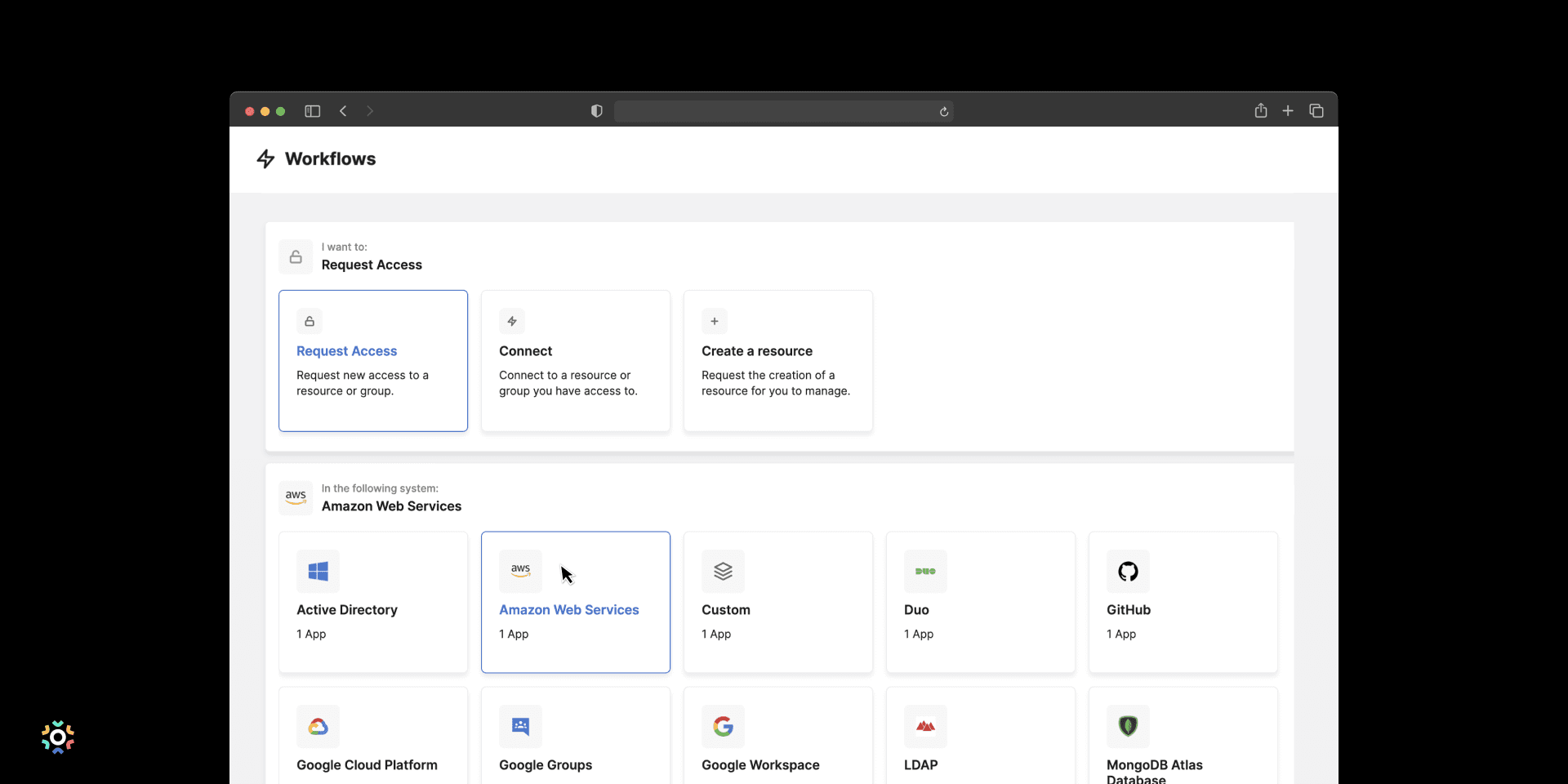
Once you choose a system, you can bulk select resources to add to your "shopping cart", which allows you to request access for multiple resources at once.

Requesting Group Access

You can also request access to groups that already have a set of configured permissions.

For example, if you’re on the API team, you can directly request access to that team to get approved for any resources that are configured for that team.

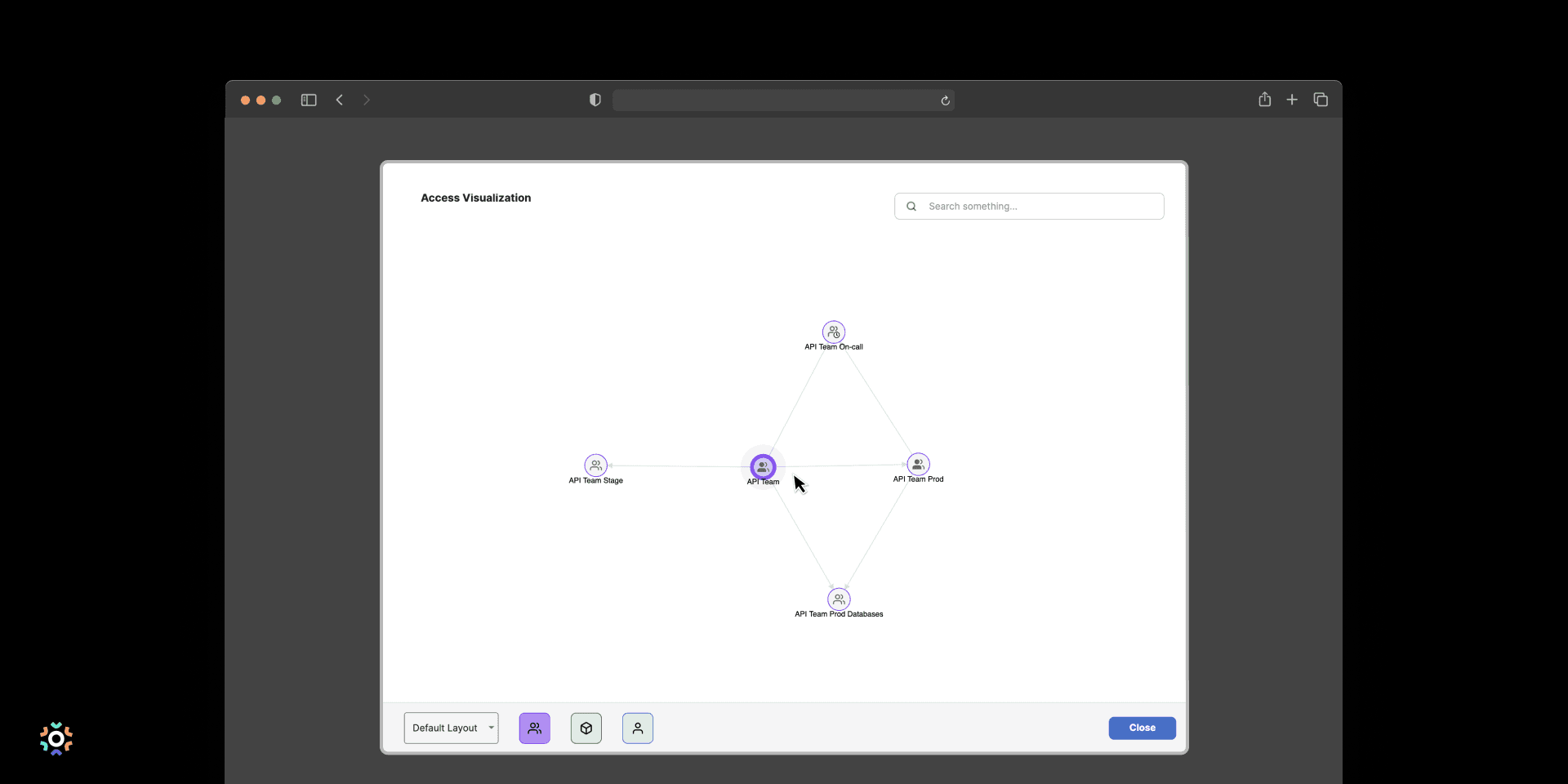
In the Opal dashboard, we've simplified the relationship between resources, groups, and users with visualizations.

Here, you can see how the API team is a parent group for four other teams. Having a group hierarchy allows our users to scale access groups without creating group scrawl (i.e., numerous duplicates of the same group, with only slight differences).
‍

Setting Access Levels and Expiration Criteria

Once you hit request, Opal gives you the option of selecting which access level or role you are requesting access for. This provides the granularity that's useful for your team.

You then have the option to link access to a support ticket or require manager approval.

Finally, Opal completes the process by sending out access requests to the right people, and the progress of the request can be tracked on the Requests page. We'll talk about that in a future post!

Want to see it yourself? Contact hello@opal.dev or book a meeting here for a personalized demo.

‍

AI that makes continuous access decisions, with you on the dial.

AI that makes continuous access decisions, with you on the dial.

AI that makes continuous access decisions, with you on the dial.

Everything you need to know about Opal

What is Opal Security and what does it do?

Opal Security is an AI-native access platform that secures access for every identity in the enterprise, from employees and contractors to service accounts and AI agents. Security and engineering teams use Opal to grant just-in-time access, enforce least privilege, automate access reviews, and remediate identity risk in real time. Companies like Databricks, Figma, and Cloudflare run Opal to govern sensitive access.

What systems does Opal integrate with?

Opal integrates with the systems engineers and security teams already use, including Okta, AWS, GCP, Azure, GitHub, Snowflake, Databricks, Salesforce, Kubernetes, databases, and Slack. It connects to your identity provider to import users and groups, then layers granular, resource-level access control on top. Access requests and approvals can run directly in Slack.

How is Opal different from traditional IGA and IAM tools?

Legacy IGA tools mostly give you visibility and periodic reviews. Opal is a modern access platform with read-write enforcement, so it does not just surface excess access, it removes standing privilege and grants just-in-time access automatically.

Can Opal govern AI agents and non-human identities?

Yes. Opal governs non-human identities, including AI agents, service accounts, and machine identities, with the same least-privilege and just-in-time controls it applies to people. Agents can call Opal for access decisions with human oversight, and every action is logged in an audit trail, so you can see exactly what an agent did with its access.

Does Opal replace my existing identity stack?

No. Opal works on top of your existing identity stack rather than replacing it. It integrates with providers like Okta and your cloud and SaaS systems, adding granular authorization and just-in-time access without ripping out what you already run.

How fast can Opal be deployed?

Opal connects to your identity provider and core systems through native integrations, so teams typically see access visibility and working just-in-time workflows in days, not the multi-month rollouts associated with legacy IGA. You can start with a single high-risk system and expand from there.

Who is Opal's leadership?

Opal is led by CEO Howard Ting, who joined in December 2025 after serving as CEO of Cyberhaven and holding senior roles at Nutanix, Palo Alto Networks, and Redis. He has since expanded the executive team with Chief Product Officer Sameer Mehta, previously at Veza, and Chief Technology Officer Alex Pien. Opal has raised $59 million in total funding, including a recent $23 million round led by Greylock and Battery Ventures, and is used by security and engineering teams at companies like Databricks, Notion, Cloudflare, and CoreWeave.

0

FAQ

See. Encode.

→ Enforce.

© 2026

See. Encode.

→ Enforce.

© 2026

See.

→ Enforce.

Encode.

© 2026