Platform

Customers

Resources

Platform

Customers

Resources

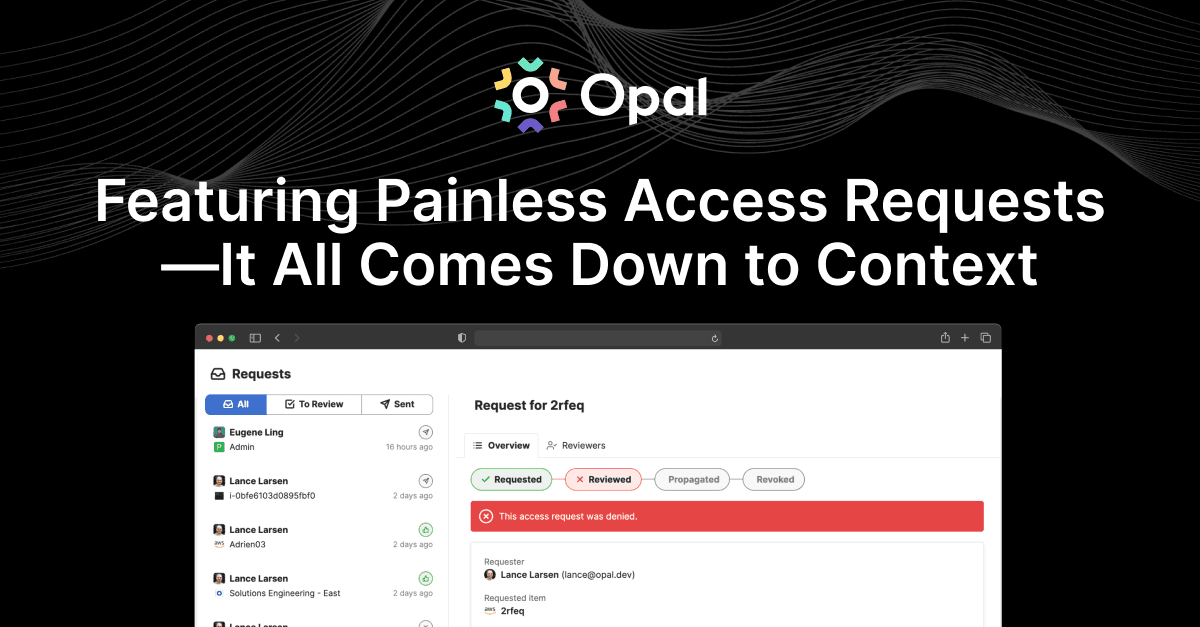
Featuring Painless Access Requests—It All Comes Down to Context

Profile Icon

Staff

Product

0

1

Features at a Glance

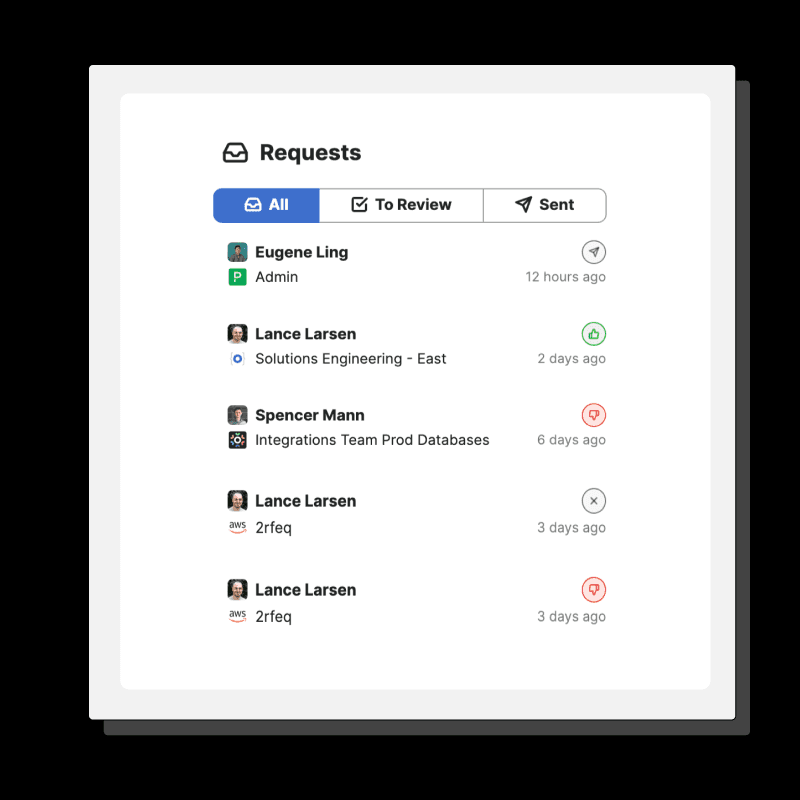
Track all requests in one place

In the handy Requests tab, we’ve made it easier to see all requests and their status in a glance.

  • The view is split so you can see the requests you’ve made and the requests you have to take action on

  • Each request status is indicated by an icon on the right-hand side
‍See the context of requests.

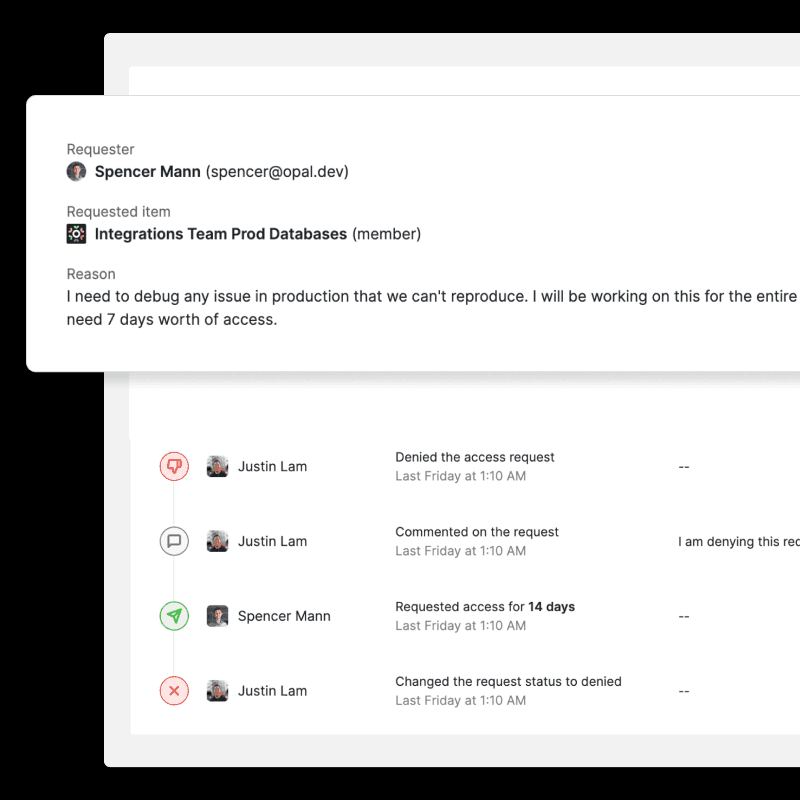
The Requests dashboard makes it easy to get a 360 view around an access request, like:

  • Who is requesting something

  • Who needs to review a request

  • What ticket is linked to the request

  • The actions taken related to the request
‍Request access again when it auto-expires.

Use templates to make the same request again.

  • Access is set to expire based on a set time or event

  • Requests that are expired are marked with a red thumbs down emoji

  • Opal saves your request as a template so you can re-use it when you need access again

A Deeper Look at Requests

‍Imagine being able to hit a button and instantly request access to anything from a database, to a Salesforce role, GitHub repo, or Okta group. And track it from start to finish.

Pressing a button to make a request seems simple, but there’s a lot happening behind the scenes.

#1: The Owner

First, Opal makes clear who the request needs to be sent to. ‍

Because of how Opal is structured, a request is immediately sent to the person with the context to approve the request.

#2: High Fidelity

Second, our deep integrations allow us to surface access to resources and more detailed roles within it.
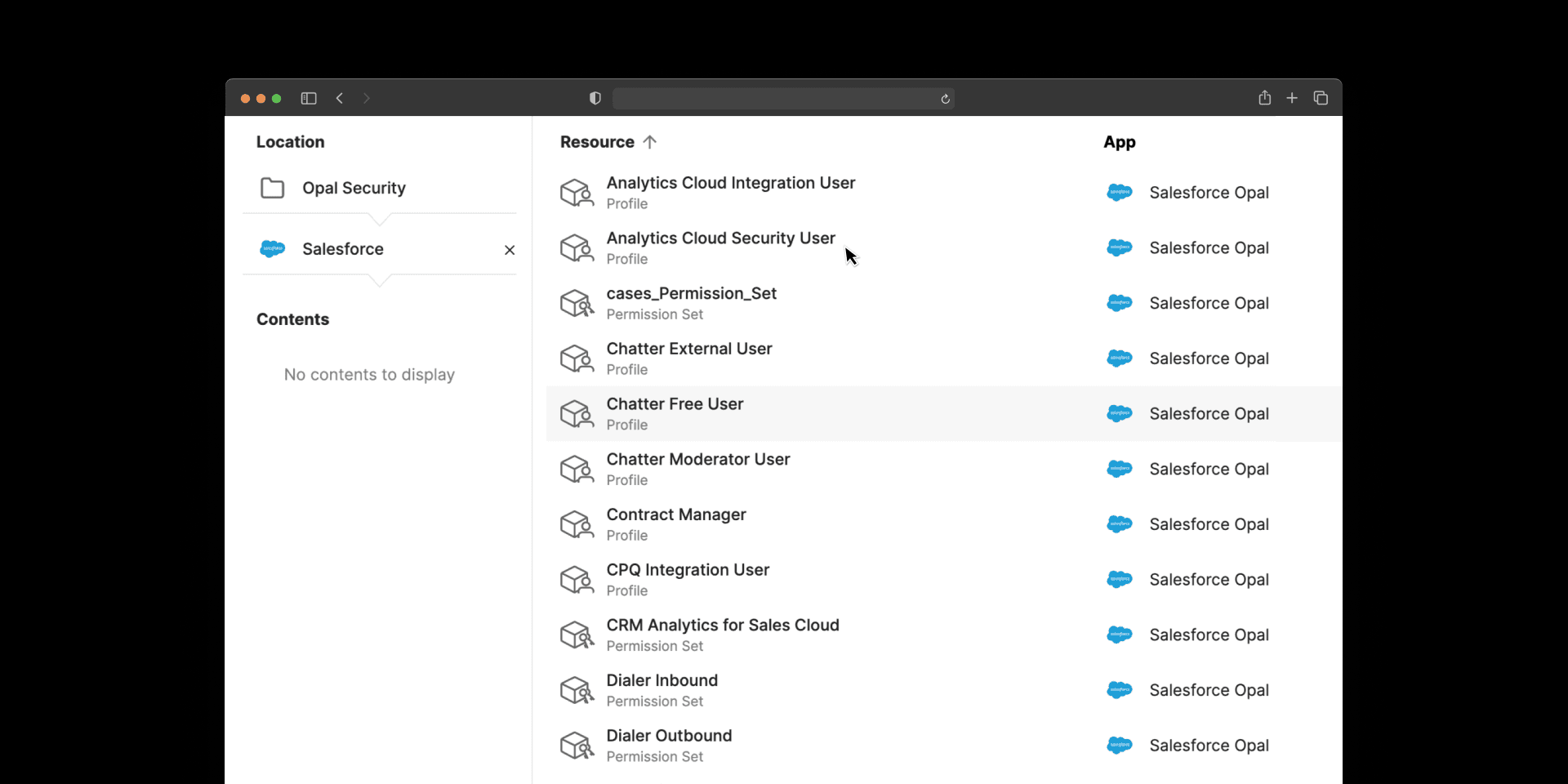
Giving access in a traditional group-based way is typically broad and limited in its usefulness.

For example, it’s the difference between being able to request access to Salesforce versus requesting access to a specific Salesforce role without actually logging in to Salesforce, going to your settings, and adding the person manually.

#3: The Life of Access Requests

Third, we believe that most access should be temporary.
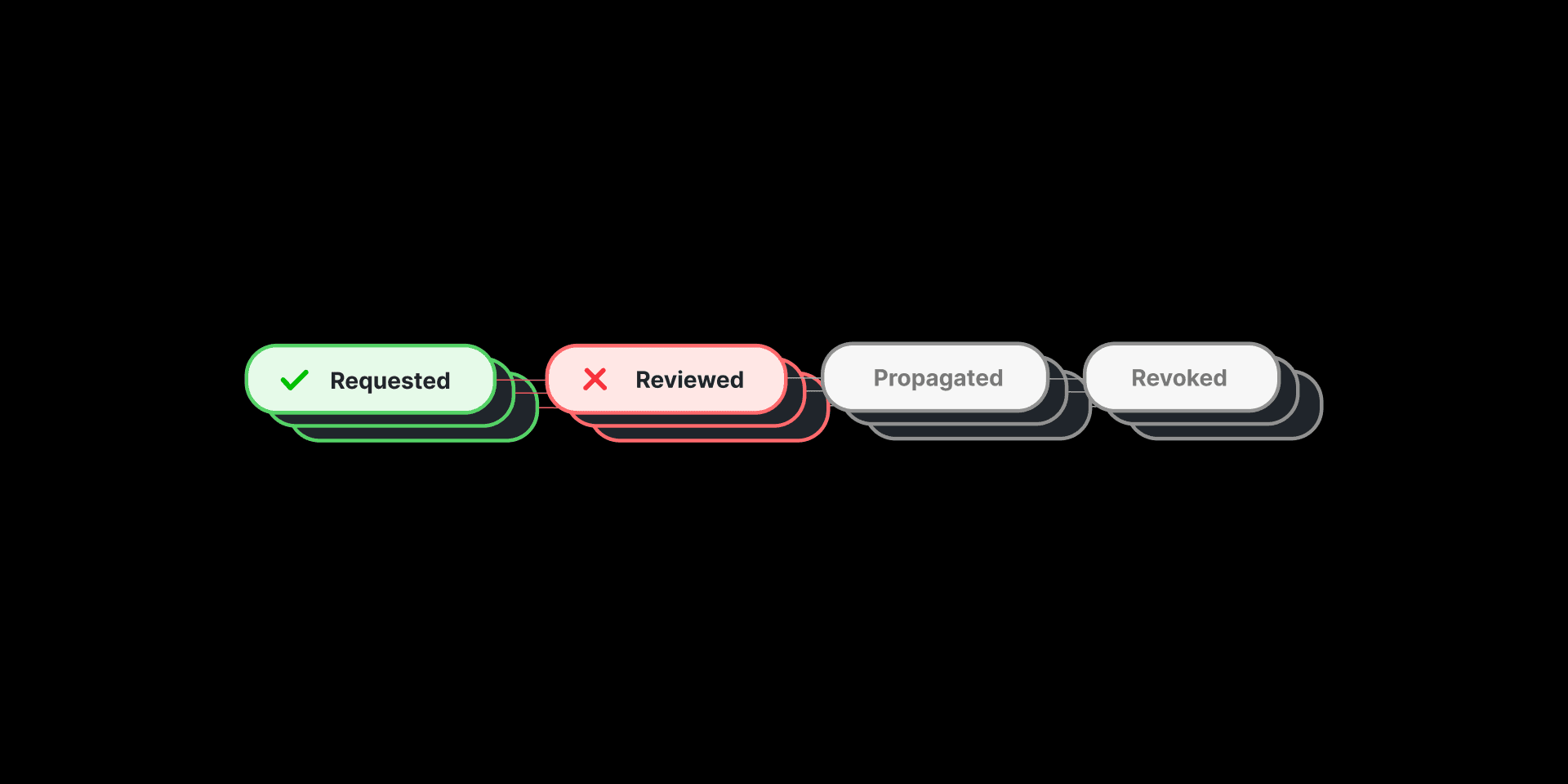
‍‍In other words, access goes through a lifecycle, from Request to Review, Propagation, and eventual Revocation.

In a world where most access is given permanently, it may seem a bit odd to designate a certain death. However, that’s part of Opal’s philosophy that short-lived access, requested only when needed, will help organizations implement dynamic least privilege.

Learn more about how just-in-time access works in Opal.

‍

Want to see it yourself? Contact hello@opal.dev or book a meeting here for a personalized demo.

AI that makes continuous access decisions, with you on the dial.

AI that makes continuous access decisions, with you on the dial.

AI that makes continuous access decisions, with you on the dial.

Everything you need to know about Opal

What is Opal Security and what does it do?

Opal Security is an AI-native access platform that secures access for every identity in the enterprise, from employees and contractors to service accounts and AI agents. Security and engineering teams use Opal to grant just-in-time access, enforce least privilege, automate access reviews, and remediate identity risk in real time. Companies like Databricks, Figma, and Cloudflare run Opal to govern sensitive access.

What systems does Opal integrate with?

Opal integrates with the systems engineers and security teams already use, including Okta, AWS, GCP, Azure, GitHub, Snowflake, Databricks, Salesforce, Kubernetes, databases, and Slack. It connects to your identity provider to import users and groups, then layers granular, resource-level access control on top. Access requests and approvals can run directly in Slack.

How is Opal different from traditional IGA and IAM tools?

Legacy IGA tools mostly give you visibility and periodic reviews. Opal is a modern access platform with read-write enforcement, so it does not just surface excess access, it removes standing privilege and grants just-in-time access automatically.

Can Opal govern AI agents and non-human identities?

Yes. Opal governs non-human identities, including AI agents, service accounts, and machine identities, with the same least-privilege and just-in-time controls it applies to people. Agents can call Opal for access decisions with human oversight, and every action is logged in an audit trail, so you can see exactly what an agent did with its access.

Does Opal replace my existing identity stack?

No. Opal works on top of your existing identity stack rather than replacing it. It integrates with providers like Okta and your cloud and SaaS systems, adding granular authorization and just-in-time access without ripping out what you already run.

How fast can Opal be deployed?

Opal connects to your identity provider and core systems through native integrations, so teams typically see access visibility and working just-in-time workflows in days, not the multi-month rollouts associated with legacy IGA. You can start with a single high-risk system and expand from there.

Who is Opal's leadership?

Opal is led by CEO Howard Ting, who joined in December 2025 after serving as CEO of Cyberhaven and holding senior roles at Nutanix, Palo Alto Networks, and Redis. He has since expanded the executive team with Chief Product Officer Sameer Mehta, previously at Veza, and Chief Technology Officer Alex Pien. Opal has raised $59 million in total funding, including a recent $23 million round led by Greylock and Battery Ventures, and is used by security and engineering teams at companies like Databricks, Notion, Cloudflare, and CoreWeave.

0

FAQ

See. Encode.

→ Enforce.

© 2026

See. Encode.

→ Enforce.

© 2026

See.

→ Enforce.

Encode.

© 2026