Platform

Customers

Resources

Platform

Customers

Resources

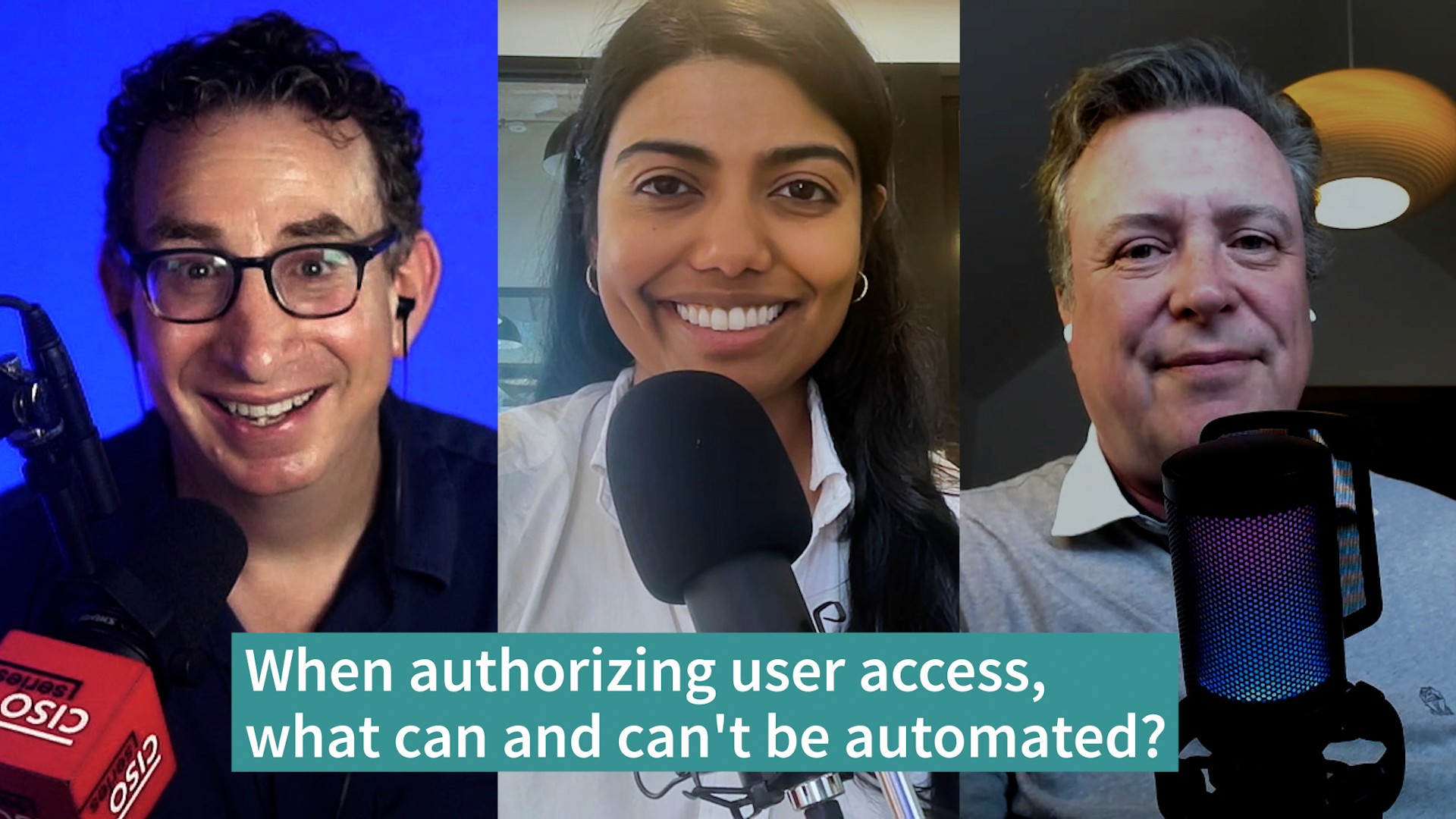
When authorizing user access, what can and can't be automated?

Company

0

1

When Authorizing User Access, What Can and Can't be Automated?


David Spark

- Paul, the world of automation, I think, has improved over time. It definitely has improved, but it is far from perfect. To what level can we automate authorization to applications?

Paul Gutherie

- We're not a hundred percent there yet but our goal is to get to the point where we can use cloud discovery software that will detect any new systems and based upon predetermined patterns, will simply spin up authorization flows. It will detect a new window server, and then it will spin up from a template, an authorization flow for a production service. And that's the type of thing that we're looking to get to. We're not a hundred percent there yet but we're a good way to getting there.

David Spark

- What is it that you are comfortable with Opal delivering on a level of automation?

Umaimah Khan

- There's like an 80-20 rule when it comes to automation and authorization and access today. And I think you can get to a point pretty quickly where you can start to kind of separate out different levels of risk baseline based on how sensitive a system is. And then, you can feel good about what a configuration looks like for a particular style of sensitive system and then start to automate that. And so that's kind of 80% of the way and where we sit and where our hope is so that you can kind of really focus that 20% of the time on your most dynamic or most idiosyncratic systems and have a little bit more, a level of depth or scrutiny there.

David Spark

- What is being automated now that you didn't automate before and was making your life miserable?

Paul Gutherie

- Opal certainly has APIs that we can use to set up authorization flows and that's something that we have been taking advantage of more and more where we are looking to API centric platforms that we can control through, for instance, our security automation platform that we use or through directly from Terraform, et. So we have multiple touchpoints, multiple things automating the authorization flows.

David Spark

- What should a user be thinking about when they get to something that they can't automate?

Umaimah Khan

- I think in authorization, this is where the kind of shift happens from productivity to true anomaly detection or threat detection and engineering. What can't be automated is effectively something that can't be pattern matched or looks a little strange. And once you get to that point, you have enough signal to start to sort of think about the problem from a fraud detection perspective like, "Hey, we know that somebody should be accessing this thing within business hours from these locations. What's happening now?" And so the way we should think about it is we're freeing up a lot of mental time and energy and maybe creative problem solving to start thinking through what could actually be like a threat in the system.

David Spark

- To learn more about automation of your authorization, why not check out what they're doing over at Opal? Head on over to www.opal.dev.

About Opal

Opal is the unified identity platform for modern enterprises. Opal aggregates identity and access data to provide visibility and defense-in-depth infrastructure for mission-critical systems. Enterprises can discover anomalous identity risks with the product and remediate them in minutes. The world's best companies trust Opal to govern and adapt sensitive access.

Want to see it yourself? Contact sales@opal.dev or book a meeting here for a personalized demo.

AI that makes continuous access decisions, with you on the dial.

AI that makes continuous access decisions, with you on the dial.

AI that makes continuous access decisions, with you on the dial.

Everything you need to know about Opal

What is Opal Security and what does it do?

Opal Security is an AI-native access platform that secures access for every identity in the enterprise, from employees and contractors to service accounts and AI agents. Security and engineering teams use Opal to grant just-in-time access, enforce least privilege, automate access reviews, and remediate identity risk in real time. Companies like Databricks, Figma, and Cloudflare run Opal to govern sensitive access.

What systems does Opal integrate with?

Opal integrates with the systems engineers and security teams already use, including Okta, AWS, GCP, Azure, GitHub, Snowflake, Databricks, Salesforce, Kubernetes, databases, and Slack. It connects to your identity provider to import users and groups, then layers granular, resource-level access control on top. Access requests and approvals can run directly in Slack.

How is Opal different from traditional IGA and IAM tools?

Legacy IGA tools mostly give you visibility and periodic reviews. Opal is a modern access platform with read-write enforcement, so it does not just surface excess access, it removes standing privilege and grants just-in-time access automatically.

Can Opal govern AI agents and non-human identities?

Yes. Opal governs non-human identities, including AI agents, service accounts, and machine identities, with the same least-privilege and just-in-time controls it applies to people. Agents can call Opal for access decisions with human oversight, and every action is logged in an audit trail, so you can see exactly what an agent did with its access.

Does Opal replace my existing identity stack?

No. Opal works on top of your existing identity stack rather than replacing it. It integrates with providers like Okta and your cloud and SaaS systems, adding granular authorization and just-in-time access without ripping out what you already run.

How fast can Opal be deployed?

Opal connects to your identity provider and core systems through native integrations, so teams typically see access visibility and working just-in-time workflows in days, not the multi-month rollouts associated with legacy IGA. You can start with a single high-risk system and expand from there.

Who is Opal's leadership?

Opal is led by CEO Howard Ting, who joined in December 2025 after serving as CEO of Cyberhaven and holding senior roles at Nutanix, Palo Alto Networks, and Redis. He has since expanded the executive team with Chief Product Officer Sameer Mehta, previously at Veza, and Chief Technology Officer Alex Pien. Opal has raised $59 million in total funding, including a recent $23 million round led by Greylock and Battery Ventures, and is used by security and engineering teams at companies like Databricks, Notion, Cloudflare, and CoreWeave.

0

FAQ

See. Encode.

→ Enforce.

© 2026

See. Encode.

→ Enforce.

© 2026

See.

→ Enforce.

Encode.

© 2026