" width="9.333999999999946px"><path d="M 0 0 L 0 9.334" fill="transparent" height="9.334000000000003px" id="Ho_4eUERn" stroke-dasharray="" stroke-linecap="butt" stroke-linejoin="round" stroke-width="1.2" stroke="rgb(35, 41, 51)" transform="translate(4.5 0)" width="1px"/><path d="M 0 0 L 4.667 4.667 L 9.334 0" fill="transparent" height="4.667000000000002px" id="q4SooRAjE" stroke-dasharray="" stroke-linecap="square" stroke-linejoin="round" stroke-width="1.2" stroke="rgb(35, 41, 51)" transform="translate(0 4.5)" width="9.333999999999946px"/></g></svg>)

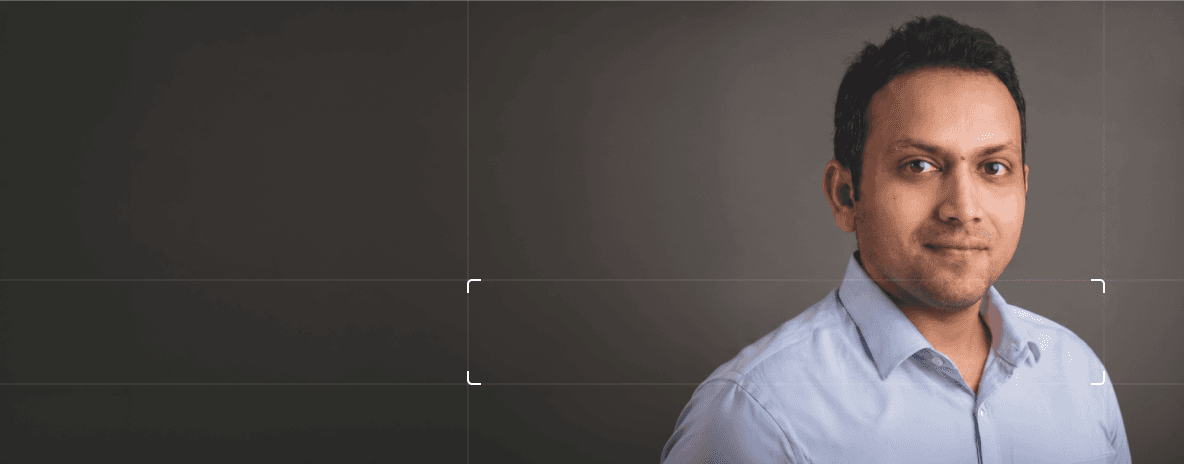
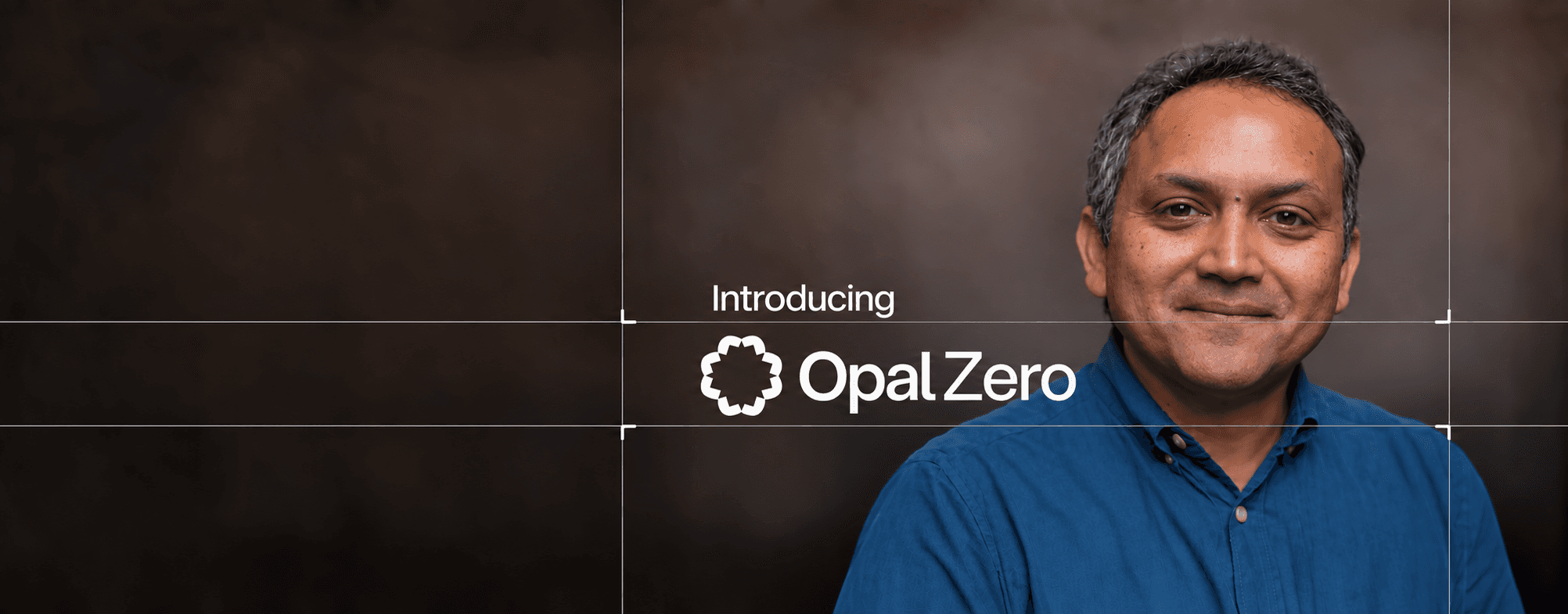
We're excited to welcome Sameer Mehta as our Chief Product Officer. Sameer has spent his career building enterprise products across identity, security, and infrastructure, most recently at Veza, and before that at Citrix, Symantec, and Sun Microsystems Research Labs.
You've spent your career in identity and security. What made Opal the right next move?
Putting visibility, governance, and access control for every identity on one platform is a really hard problem, and most tools have only solved a piece of it. Few can right-size permissions for humans and non-human identities alike, both when access is granted and at runtime. Opal was built for that: programmable to the core, policy as code, AI as the architecture. That's usually the difference between a product that scales and one that stalls.
From a product standpoint, what's actually changing in how organizations govern access?
The CISO's mandate doesn't change: protect the organization. The threat does. Bad actors used to be people; now they're agents moving at machine speed, and tools that need a human in the loop can't keep pace. Teams already run something like 50 agents per human, and each is a new identity. The blind spots scale too: a developer can stand up an MCP server from a laptop and expose sensitive data. So expectations rise. Teams want every decision explainable and tied to real usage, and they want to ask who can reach this production system and why, and get an answer in seconds, not a stale quarterly report.
You led product at Veza, and earlier at Citrix and Symantec. What carries over to Opal?
This mindset is why I became a PM: I wanted to build products customers love. The empathy is staying close enough to feel their real problems. And trust matters most in security, so accuracy and explainability come first. In practice, that means sequencing the roadmap with customers so it flexes as their needs change.
Which AI agents should enterprises worry about most?
The agents that should concern enterprises most are autonomous agents with standing access to critical systems. They operate under their own identity, can take action without human approval, and often have broad privileges.
The challenge is that AI has dramatically lowered the barrier to building software. My own mother is using Claude to build an application that translates Sanskrit texts into a local language. At the same time, employees can use OpenAI or Anthropic to build agents connected to enterprise systems in hours.
Every one of those agents becomes a new identity with access, permissions, and the ability to take action. The risk isn't the model - it's losing control over what those identities can do as they proliferate across the enterprise.
The real question isn't "What kind of agent is this?" It's: Who does it act for, what can it reach, and do we have the ability to control and contain it when needed?
As Opal becomes core infrastructure for more customers, how does that shape your priorities?
First, our agentic strategy. Customers consistently tell us that security and control are the biggest obstacles to deploying AI agents at scale. Solving that problem is a major investment area for us.
Second, stay close to customers. The best roadmap comes from understanding where customers are headed and helping them get there.
Third, continue building a strong product culture grounded in curiosity, customer empathy, and execution. Great products are built by teams that listen, learn, and move quickly.
What are you most passionate about outside of work?
A bit of everything. Cooking, biking and swimming. A fun fact about me: I love doing dishes. I find it oddly therapeutic, which my wife is always happy to hear!
The platform behind the conversation
Paladin — an AI reviewer that evaluates every access request and escalates only what needs a person.
OpalQuery — ask your access graph anything in plain language and get answers in seconds.
OpalScript — access policy written as version-controlled, testable code.
Opal is the AI-native access platform for every identity, from employees to service accounts to AI agents. See how teams put just-in-time access and AI-powered access reviews to work at opal.dev, or request a demo.